Central Park Landmarks
The Obelisk (Cleopatra's Needle) Pedicab Tour
The Obelisk, widely known as Cleopatra's Needle, is an ancient Egyptian granite monument standing on a knoll behind the Metropolitan Museum of Art. At about 3,500 years old, it is the oldest outdoor monument in New York City and the oldest man-made object in Central Park.
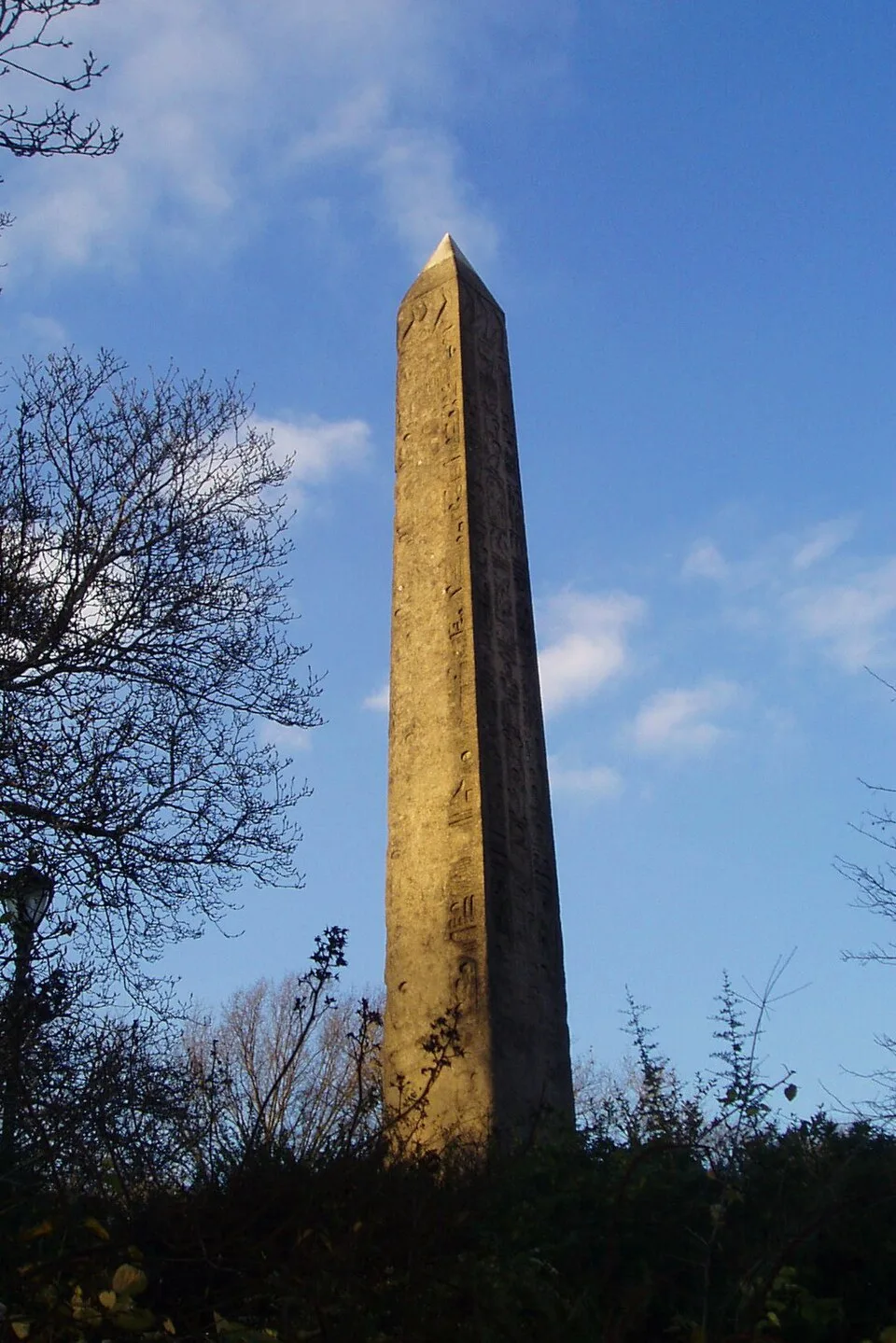
Photo: Ekem (English Wikipedia) · CC BY-SA 3.0 · Source
Quick facts
- Where
- Greywacke Knoll, East Side at 81st Street, between the Great Lawn and the Metropolitan Museum of Art
- Age
- about 3,500 years old
- Material
- a single piece of Aswan granite
- Size
- the shaft is 69 feet tall and weighs about 200 tons
- Raised in Central Park
- January 22, 1881
- Origin
- made for Pharaoh Thutmose III, for the sun temple at Heliopolis
Want to see The Obelisk?
Request a booking and tell us where you'd like to go.
History
The Metropolitan Museum of Art says Pharaoh Thutmose III commissioned the obelisk, along with a twin, for the sun temple at Heliopolis. Both toppled in antiquity. The Roman emperor Augustus moved them to Alexandria around 12 B.C., where they stood at the Caesareum, a temple Cleopatra VII had built for the deified Julius Caesar. That is the likely source of the name, since the obelisk has no direct link to the queen herself. The twin was raised in London in 1878.
The Egyptian ruler Khedive Ismail gave the obelisk to the United States, and it was shipped to New York aboard the Dessoug. Navy Lieutenant Commander Henry H. Gorringe planned and supervised the move, and William H. Vanderbilt paid for the removal, pedestal and base. Crossing the 86th Street Transverse took 19 days, and the final trip from Fifth Avenue to the knoll took 20 more, slowed by a blizzard. About 9,000 Freemasons paraded to the park for the cornerstone ceremony on October 9, 1880. The obelisk was raised on January 22, 1881.
Between 2011 and 2014 the Conservancy, working with the Met and NYC Parks, carried out the monument's first comprehensive conservation, using lasers to remove dirt from its 2,112-square-foot surface.
What to look for
- The hieroglyphs carved into the granite
- Four bronze crabs supporting the corners of the base (the Roman originals are in the Met)
- The inscriptions on the crabs, which record the move to Alexandria and the move to New York
- The decorative fence designed by Jacob Wrey Mould
Visiting The Obelisk
The Obelisk is directly behind the Met and near The Great Lawn and Belvedere Castle. There are no restrooms nearby, but the Met is next door. A restored plaza with benches lets you see the hieroglyphs closely.
Frequently asked questions
Why is it called Cleopatra's Needle?
Probably because it stood at the Caesareum in Alexandria, a temple built by Cleopatra VII. It has no direct link to the queen.
How old is the obelisk in Central Park?
About 3,500 years old.
How did it get to New York?
It was carried across the Atlantic on the ship Dessoug, and Henry Gorringe led the move. It was raised in Central Park on January 22, 1881.
Where is it?
Behind the Metropolitan Museum of Art, on Greywacke Knoll at East 81st Street.
Sources
Nearby landmarks
← All landmarksBook Your Tour
Curious to stand beside an ancient wonder? Choose a pedicab tour and tell us when you would like to ride.
Request a Booking